A Falcon 9 upper stage that launched in January 2025 carrying two private lunar landers struck the moon last month, leaving a crater about 20 meters wide. In the days before impact, researchers at the University of Tasmania's School of Natural Sciences detected the 13-meter rocket stage by radar, becoming the first in the world to track the object and helping to refine predictions of where it would land.
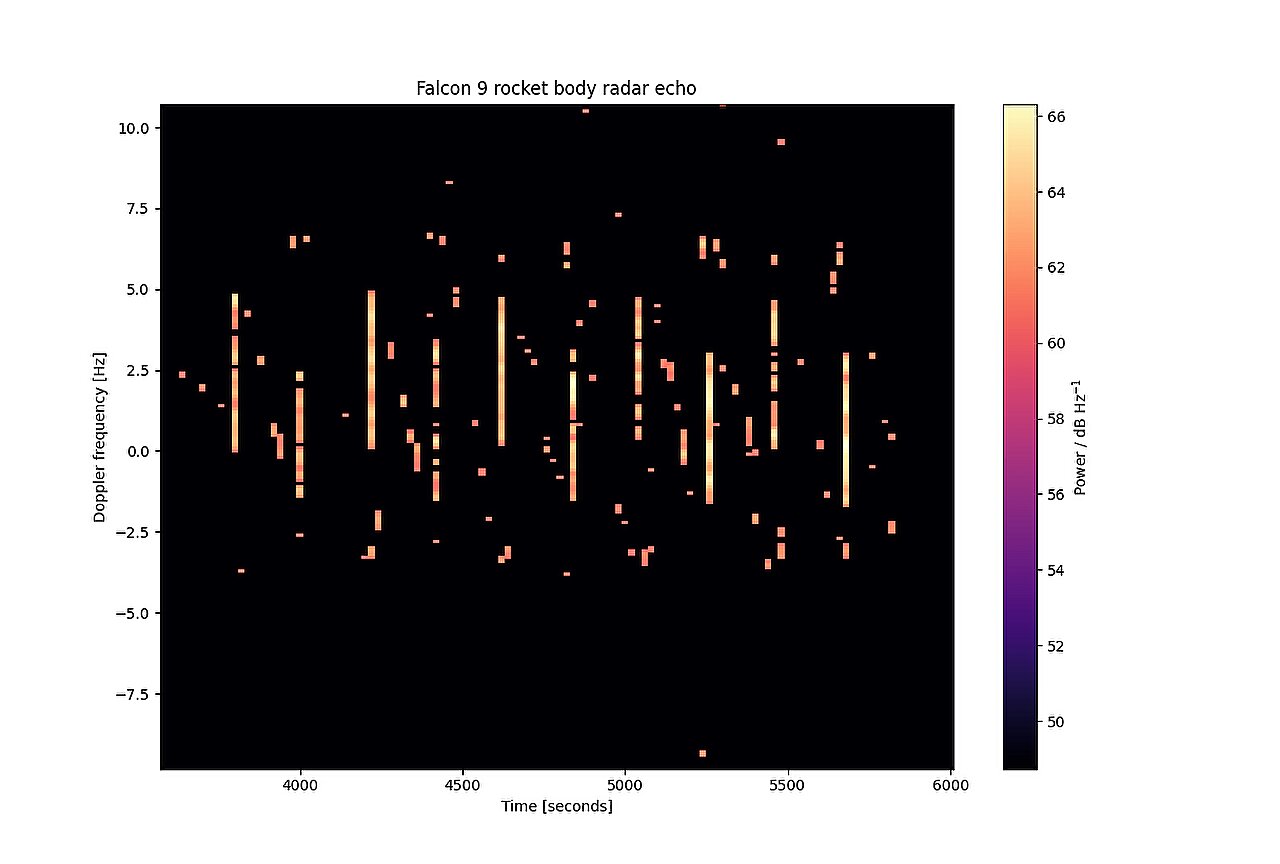
Ph.D. candidate Oliver White led two deep-space radar observations on July 26 and 29 as part of an international effort. NASA's 70-meter antenna at Tidbinbilla, near Canberra, transmitted a radar signal toward the rocket body nearly 400,000 kilometers from Earth. The faint echo was picked up by radio telescopes in Hobart, Ceduna in South Australia and Yarragadee in Western Australia. The observations showed the rocket was slightly off its predicted position, providing researchers with measurements to refine impact predictions.
Fellow Ph.D. candidate Liam Filby used radar-processing techniques to analyze the object's motion as it traveled through space. His analysis showed the rocket body was tumbling, completing a full rotation about once every seven minutes. The radar data revealed not only the object's position but also information about how it was moving hundreds of thousands of kilometers away.
Dr. Guifré Molera Calvés, who leads space situational awareness activities at the University of Tasmania, said the combination of a rare lunar impact and real-time tracking from Australia made it significant. The university team worked alongside radio observatories in the United Kingdom, Spain and Latvia, as well as the European Space Agency's tracking station at Cebreros in Spain. Molera Calvés said the event demonstrated that space debris was no longer only a problem in orbit around Earth.
The work comes as Australia takes a larger role in tracking and managing space debris. The Australian Space Agency joined the Inter-Agency Space Debris Coordination Committee in September 2025, with the University of Tasmania among its key partners contributing expertise and observations to coordinate research and share data on the growing problem.