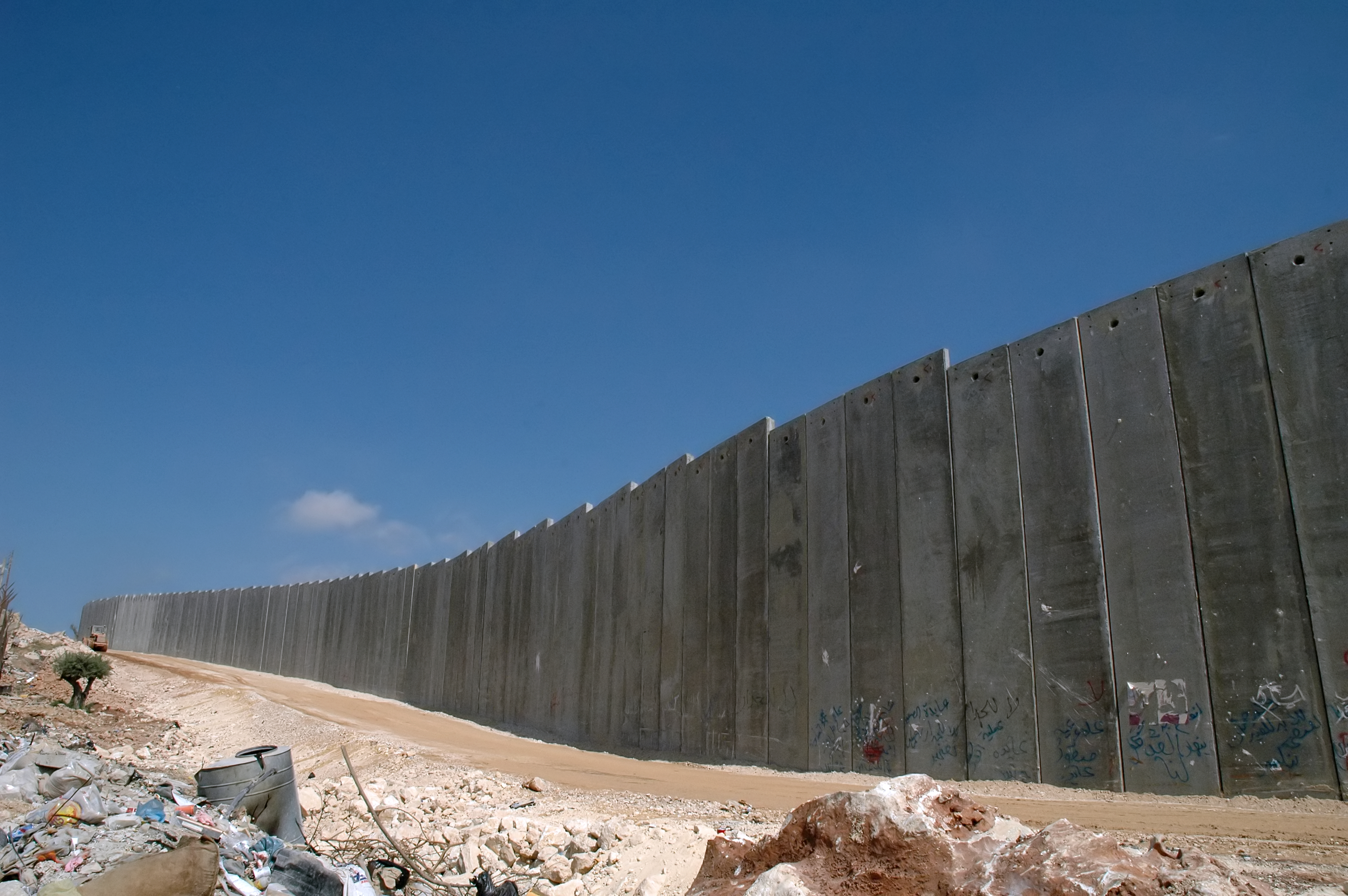
Checkpoints and barriers across the occupied West Bank form an integrated control system that dictates the lives of millions of Palestinians, according to a review of the restrictions. On main streets alone, there are 98 checkpoints and crossing points, 135 gates and 70 barriers—totalling 303 physical obstacles. These are compounded by restrictions on entering the "seam zone" and East Jerusalem, limits on crossing parts of Highway 5 and Route 557, and security inspections for Palestinian use of Highway 443, fragmenting Palestinian movement and affecting daily life, economic activity and Palestinian Authority management.
A field survey published in April 2026 by the UN Office for the Coordination of Humanitarian Affairs documented 925 obstacles to movement across the West Bank, including trenches and local barriers even in East Jerusalem—the highest figure recorded in the past 20 years and a 43 percent increase on the average of recent years, the survey noted. These obstacles restrict the movement of 3.4 million Palestinians. More than 120 gates were installed in 2025 alone, with at least 459 obstacles blocking connections between Palestinian communities and main streets, and 121 affecting access to Highway 60, described as the West Bank's main economic artery.
A separation barrier of planned length 712 kilometers adds to these restrictions, with an associated permit system. Sixty-four percent of the barrier has been built, with 85 percent of it running inside the West Bank rather than along the pre-1967 border. In the area between the barrier and that border—covering 4.5 percent of the West Bank—Palestinians are barred from entering except those with permits based on residency or property ownership. Of 34 crossings along the barrier, only a few allow Palestinian cardholders with Israeli permits to enter East Jerusalem and Israel. More than 14,000 Palestinians living between the barrier and the pre-1967 border must coordinate their movement to reach services, markets and family.
For Israelis, travel time to work, hospital or family depends on distance and traffic; for Palestinians, it depends also on whether a crossing is open, a checkpoint staffed, a surprise barrier erected, a permit required, or a shortcut closed and replaced by a long detour, making it impossible to plan a working day or maintain supply chains, seek treatment or attend school regularly. The World Bank estimated that the West Bank economy contracted by 17 percent in 2024, with this crisis emerging from tightened movement restrictions, lost access to labour markets and financial crisis. Unemployment reached 29 percent by year-end 2024, compared with 13 percent before the war. While not entirely attributable to checkpoints, the economists noted, no economy can flourish when workers, goods, customers and services cannot predict when they will reach their destination.
Israel has the right and responsibility to protect its citizens and counter terrorism, but the concept of "security needs" does not exempt it from reviewing each restriction according to its necessity, effectiveness and proportionality. The Israeli Supreme Court clarified this in a 2009 ruling on Highway 443, cancelling a blanket ban on Palestinian movement there and ruling that security alone was insufficient, with military commanders obliged to meet the needs of local populations. The current arrangement differs little from that complete closure, but the principle remains: security does not grant absolute licence to seal a public road from an entire population.
The International Court of Justice, in an advisory opinion issued in July 2024, found that the system of movement restrictions creates a different relationship towards Palestinians and distinctly harms freedom of movement and related rights. Even those who dispute this opinion cannot ignore the reality it noted: a dual transport system in the same territory, one designed to provide continuity, speed and ease of access for Israelis, the other imposing obstruction, supervision and dependence on Palestinians. The problem is not only moral but also a political and security failure. Dividing the West Bank into disconnected areas weakens the Palestinian economy, undermines the Palestinian Authority, deepens humiliation, fails to achieve stability, increases friction, strengthens extremists and pushes away the possibility of a two-state solution—the stated policy of the current Israeli government.
The alternative is not abandoning security, but more precise security policy: removing unjustified restrictions, replacing blanket closure with targeted measures, scrutinising the necessity of each checkpoint, and enforcing law firmly against terrorism and violence by all parties. Palestinian traffic connections must be restored and normal life resumed. Israel must also have a political horizon. Those seeking Israeli security cannot settle for opening another bypass road. Real security depends on a system of regional alliances and the nature of relations between states and their borders. Otherwise the arrangement will not remain temporary but become the permanent plan of one state, where one people enjoy broad freedom of movement and another a conditional and limited freedom.