Momen Abu Jarrad, 29, is preparing for his wedding but furnishing a home in the Tal al-Hawa neighbourhood west of Gaza city has proven difficult. Traditional bedroom sets that survived the war now cost over $5,000, he told The National, a price most young people cannot afford. Israeli restrictions on the territory have barred new wood and furniture from entering Gaza.
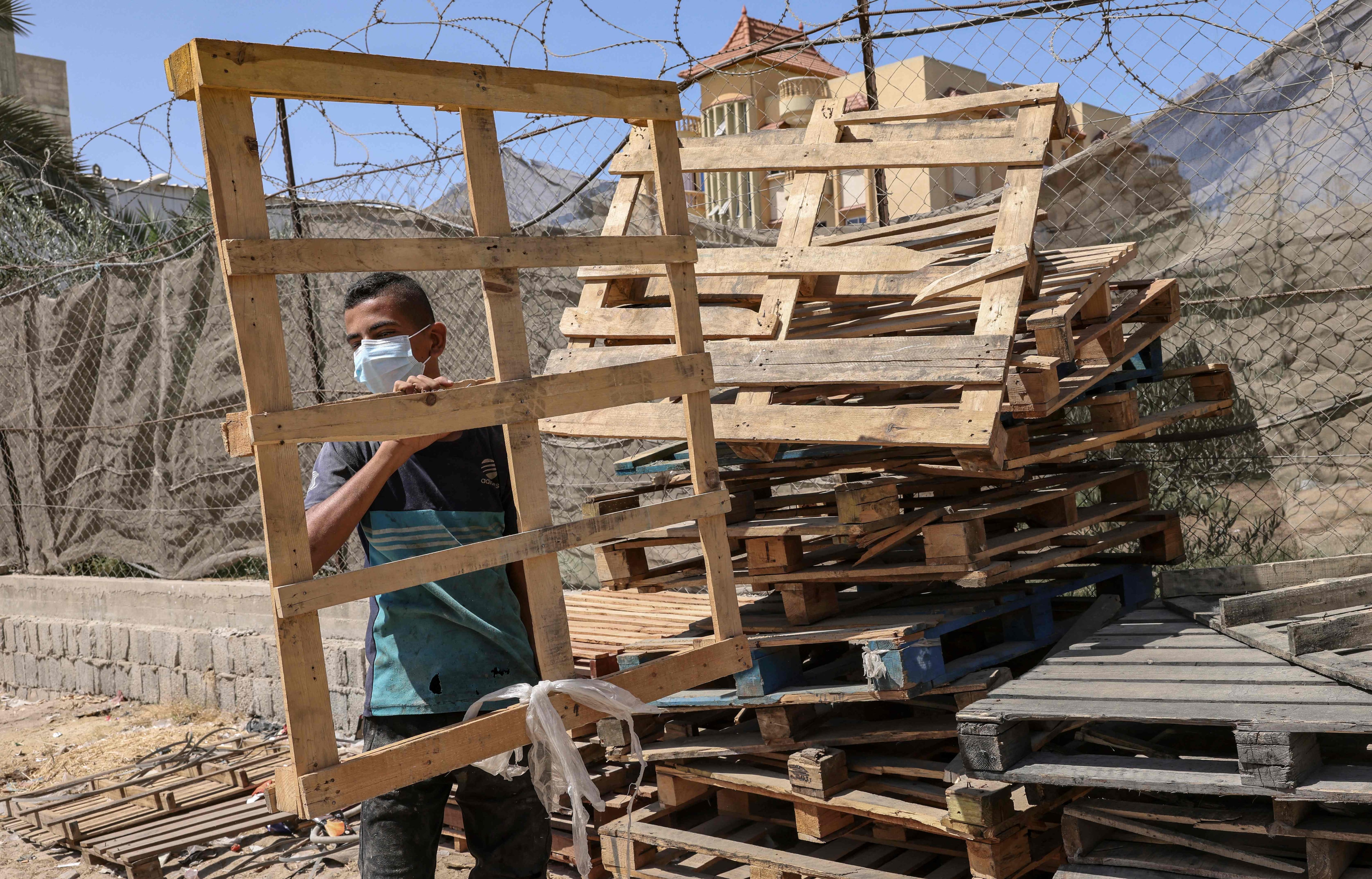
About two months ago, Mr Abu Jarrad discovered a carpentry workshop making furniture from wooden pallets used to transport aid and commercial goods into Gaza. A complete bedroom set from pallets costs about $1,300, less than a third the price of a traditional set. Residents and carpenters dismantle the pallets, remove nails, and transform the planks into beds, wardrobes, desks, chairs and shelves.
Pallet-made furniture has become common across Gaza as conventional timber has grown scarce. Before the war, Gaza's carpenters worked with a variety of imported woods and equipped workshops; much of that industry has been destroyed. Ahmed Abu Khadra, owner of a carpentry workshop in Gaza city, now relies almost entirely on pallet wood, which he said "has helped ease a major crisis by providing raw materials."
A pallet that cost about five shekels before the war now sells for 70 to 100 shekels, roughly $23 to $33. Working with limited resources and tools, carpenters produce practical pieces through a slow, physically demanding process: each pallet is carefully dismantled, nails removed, uneven pieces cut, sanded and assembled. A two-person wardrobe costs about $330 and a desk about $130.
Mohammed Farwana, 36, a displaced resident of Deir al-Balah, is using pallets to build a one-bedroom house after spending two and a half years in tents. He started construction two months ago and expected to finish this month. Materials originally intended for temporary aid delivery are being used as beds, desks for children and walls for displaced families.