Georgia's Ministry of Internal Affairs has been using a facial recognition system called Polyface, procured from Moscow-based company Papillon AO, to identify protesters and issue fines. The system has been expanded over the past two years to cover extensive surveillance camera networks across the country. Papillon AO and other Russian companies operating in Georgia are obliged by Russian law to cooperate with Russian security services if compelled.
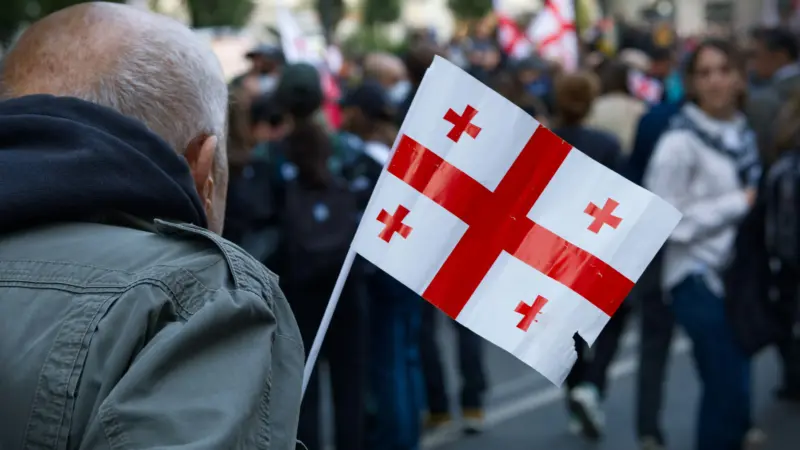
In March 2025, a woman identified as Nino received a summons from Tbilisi City Court more than two months after attending a protest near Georgian Parliament against alleged election rigging and the suspension of EU integration talks. She was shown video footage of herself at the protest and accused of initiating a road blockade; the facial recognition system identified her as an unlawful protester. A fine of 5,000 Georgian lari—approximately €1,620 or $1,878—was imposed; her bank accounts were subsequently frozen, and she launched a crowdfunding campaign to pay the penalty.
Penalties for protest-related actions escalated sharply between 2024 and 2026. The fine for blocking a road rose from 500 lari to 5,000 lari, while face-covering became an administrative offense in 2024 and a criminal offense by 2025; gathering itself required state registration as of 2025. By March 2025, at least 2 million lari—around €640,000 or $767,893—in penalties had been imposed on protesters. Many demonstrators said they ceased attending protests after facing these fines, according to the article published on Algorithm Watch and republished by Global Voices.
The crackdowns followed mass demonstrations that erupted after Georgia's October 2024 parliamentary elections, which many Georgians viewed as rigged. Protests spread to dozens of cities and lasted 580 days consecutively; the European Parliament called for a re-run of the vote. Prime Minister Irakli Kobakhidze announced in response that the government was suspending EU accession until 2028, a decision widely considered unconstitutional since Georgia's constitution requires public bodies to facilitate EU integration, which 86 percent of Georgians supported.
Police used water cannons and rubber bullets on demonstrators in November and December 2024. Georgia's Public Defender's Office recorded 282 cases of physical abuse during this period, with at least 486 people detained in those two months alone. Thematic protests led by teachers, musicians, athletes, and doctors spread to 37 of Georgia's 55 cities and more than 40 cities abroad.