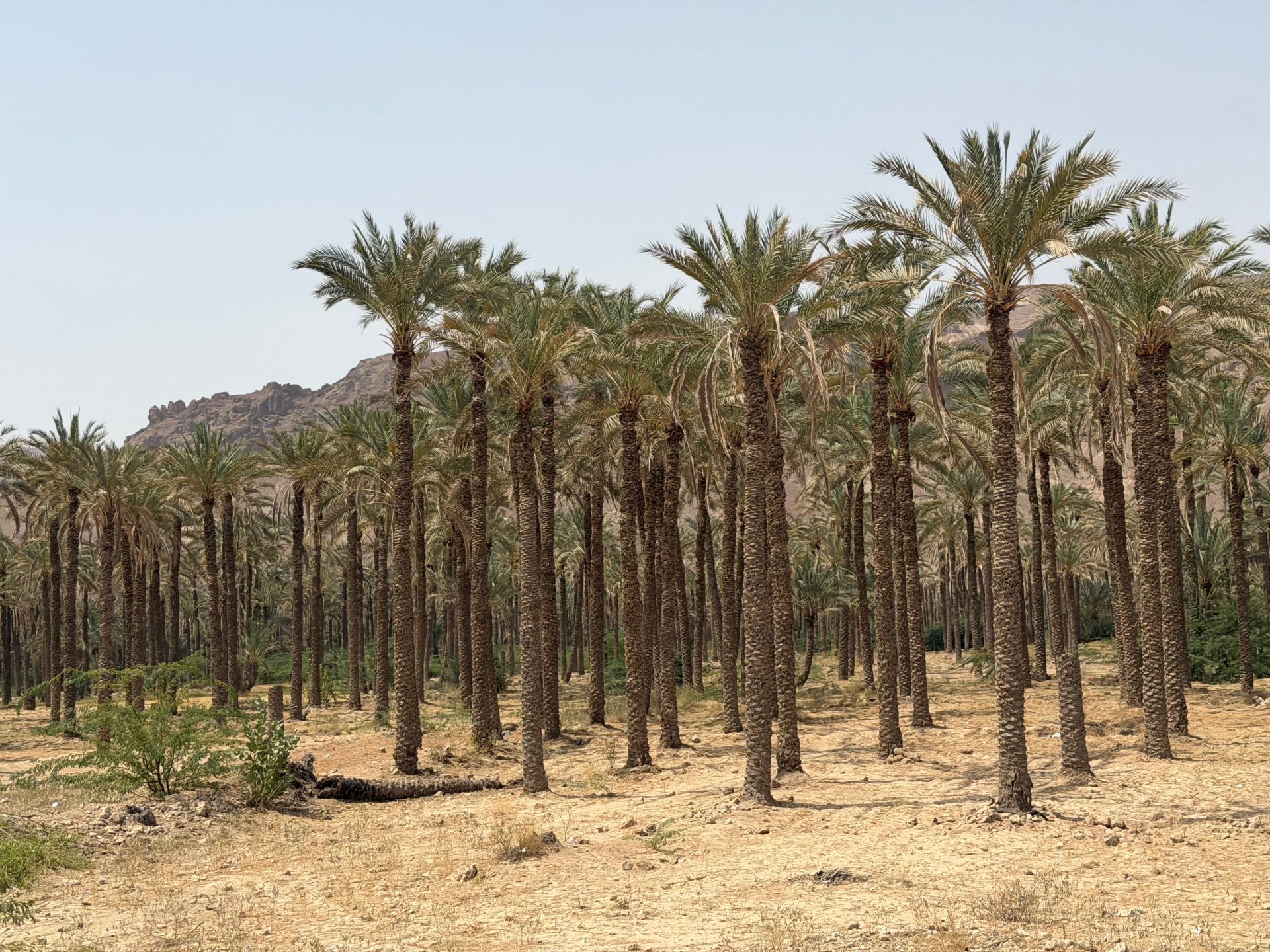
In Hajr, a district in Yemen's Hadramout region, families spread dates across rocky ground each harvest season to dry and prepare them for sale using methods that have persisted for centuries. Farmers and their families work daily to turn and sort the fruit, removing damaged dates before marketing them to buyers who move between the piles inspecting quality and price. Local officials told Al Jazeera the district contains at least 2 million palm trees, though no official figures exist for annual production.
Nabeel Ahmed, who harvests dates with his family, described the crop as his sole source of income, which he supplements by keeping dates for family consumption and storage for Ramadan. For some of Hadramout's poorest families, dates also serve as a food safety net when they cannot afford other staples like fish and rice. Rashed Mohammed, a father of four, worried he would be unable to repay a debt of 1 million Yemeni riyals (about $640) to a local grocery if he could not sell his harvest before the season ended.
Many farmers buy food on credit throughout the year and delay major expenses like weddings or house construction until after the harvest. Some lack enough cash to transport their dates to larger markets elsewhere in Yemen and instead compensate drivers with crates of dates. Farmers who do not sell remain overnight in makeshift shelters made from palm fronds, both to guard against theft and to be available if buyers arrive after dark.
The district's economy has deteriorated over more than a decade of war in Yemen and amid the lack of stable government institutions. Hajr has no electricity, poor mobile phone service, unpaved roads, and has experienced repeated cholera outbreaks that locals and health officials attribute to inadequate sanitation and lack of clean water. Farmers say floods months ago destroyed a small dam that diverted river water to their farms, significantly reducing water reaching the palm groves and causing trees to die.
Awadh Mubarak, head of a local farmers' committee, said many farmers have abandoned agriculture for security and military jobs as palm trees die and production declines. Farmers have called for reconstruction of the dam and for investors and the government to build a date-processing and packaging factory to reduce labor and improve marketing of their produce. Mubarak told Al Jazeera that "instead of my family and me going out every day to clean the dates, for example, we could take them to the factory."