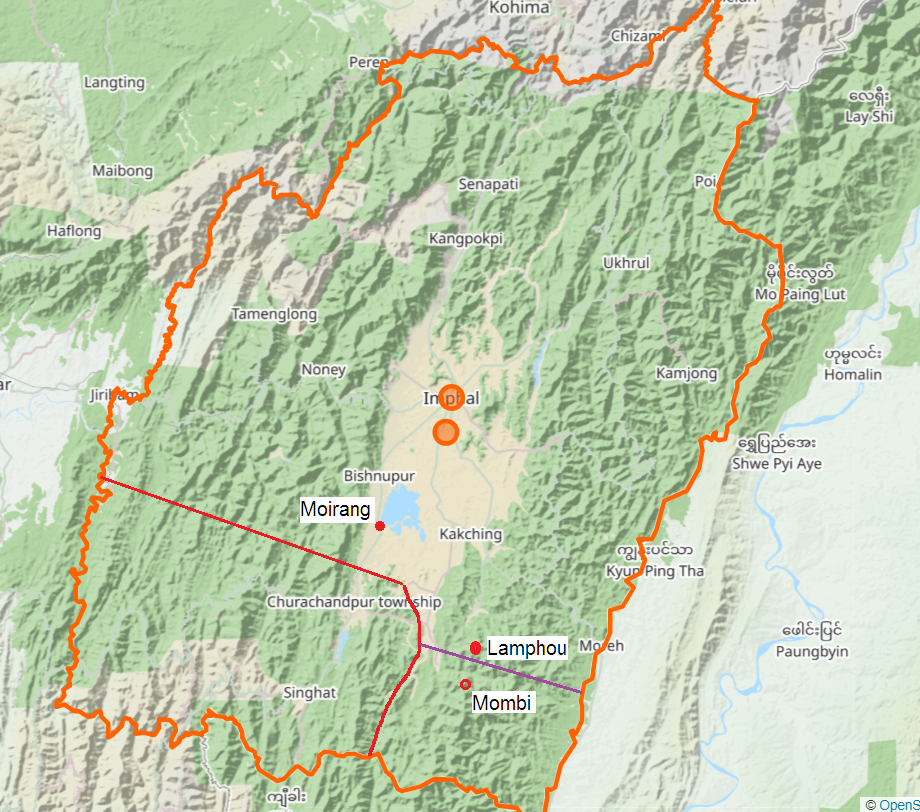
At least seven people were killed in late August 2026 in renewed violence between Naga and Kuki-Zo tribal communities in Manipur, a northeastern Indian state. The clashes have left 34 dead since ethnic hostilities between the two groups began in February, according to Human Rights Watch. The organization said on September 4 that Indian authorities had failed to adequately address the escalating violence.
The February clashes stemmed from a minor altercation in Ukhrul district rooted in decades-old territorial disputes. Violence intensified in May after three Kuki church leaders were killed following a meeting with Naga pastors aimed at resolving tensions. Armed groups on both sides abducted 48 people that month; six Naga hostages were found dead a day after Naga groups released 14 Kuki hostages.
The Naga-Kuki violence has expanded an earlier conflict involving the Meitei community, who are predominantly Hindu, and the Kuki-Zo, who are mostly Christian. That conflict began in May 2023 and has caused more than 260 deaths and displaced more than 60,000 people. Armed militant groups have burned homes, taken hostages, blocked highways and engaged in gunfire in villages across the hill districts.
Naga groups blocked a national highway in May, choking supplies to Kangpokpi district, which has a Kuki-Zo majority. Kuki-Zo groups responded with a counterblockade in July through two settlements, restricting goods to Ukhrul district, which has a Naga majority. Chief Minister Yumnam Khemchand Singh called for the resumption of free movement, and the Kuki-Zo blockade was lifted three days later. However, the Naga groups continue to block the highway to Kangpokpi district despite a Supreme Court order on August 14 directing both groups to plan for reopening the roads.
The blockades have increased food and cooking gas prices and made it difficult for residents to reach hospitals. A 32-year-old Kuki man told Human Rights Watch that he was unable to take his 3-month-old daughter 32 kilometers to Kangpokpi district hospital; the child died of high fever, vomiting and breathing difficulties on August 18. A Naga pastor shot in Old Tapon village on September 1 alleged that security forces responded slowly to suspected Kuki militants opening fire and burning homes.
An inquiry commissioned by India's Ministry of Home Affairs into the 2023 violence was set up in June 2023 but has yet to submit a report; the retired judge leading the commission resigned in February 2026, three months before the most recent deadline. In August, the Supreme Court directed a committee it appointed in 2023 to verify claims that several affected communities had not received rehabilitation and welfare benefits.