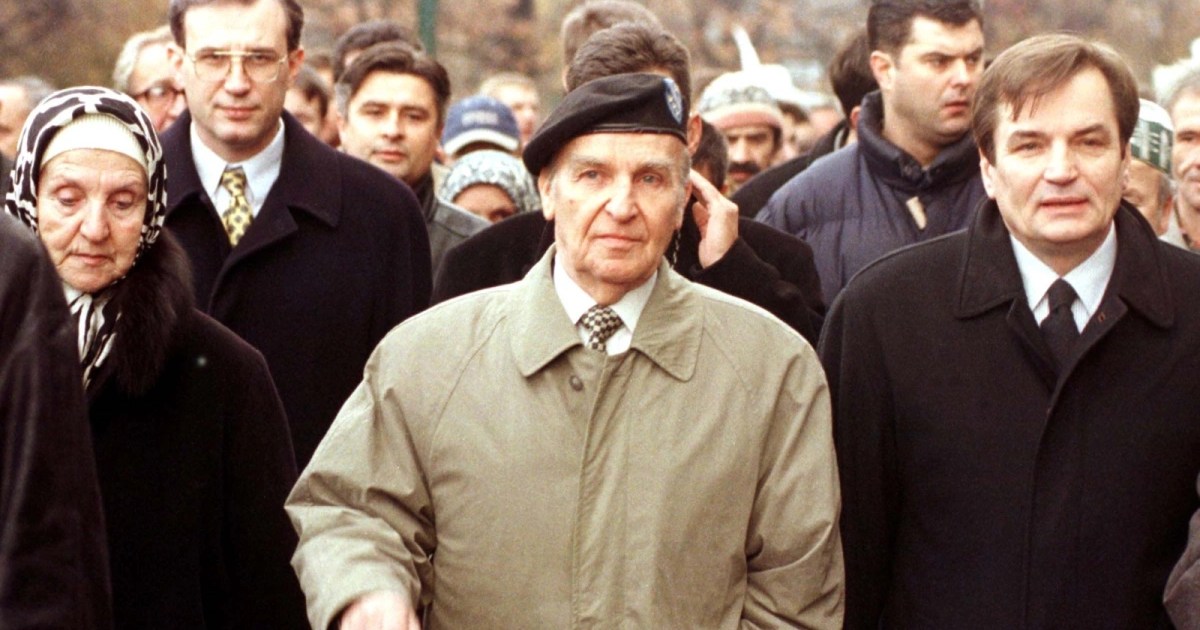
The text describes a visit to Sarajevo, near its old town, to pay respects at the martyrs' cemetery and the grave of Alija Izetbegovic, who led the Bosniak people during the Bosnian war. The author recalls the shelling of Sarajevo by Serbian forces and what the text describes as the failure of Dutch UN peacekeepers at Srebrenica. The narrative frames Izetbegovic as a "philosopher of resistance" who presented Islamic ethical values to Europe.
The text recalls an earlier article comparing Izetbegovic's philosophy to that of Nietzsche, and states it examines how Izetbegovic's Islamic philosophy created a model in the heart of Europe. It notes that unlike his political history leading Sarajevo's defense, this analysis focuses on his spiritual and philosophical dimensions, shaped by his imprisonment under communism and his writings on Islam's place between East and West.
The author met with a former soldier and guide who had fought in the Bosnian resistance army, and with General Fikret Cuskic and researcher Anes, who described how Izetbegovic discussed with commanders how to ensure the safety of Serbian and Croat civilians during military operations. The text portrays Izetbegovic as a historical intellectual figure whose philosophy differed from Western thinkers and whose leadership faced the conflict between ethics and freedom against what it calls secular humanism.
The author visited the building where Izetbegovic had a simple apartment and learned that the United Nations had offered him the presidential palace, fortified by Security Council decision as the seat of the Bosnian presidency to ensure peace negotiations. Izetbegovic declined and remained in his street facing the shelling, overseeing civilians entering their homes or shelters during military attacks, then returned to his apartment rather than the palace.
The text recounts visiting the Tunnel of Hope, a museum carved by Bosniak blood and sweat as a supply route during the Sarajevo siege, which brought humanitarian aid and weapons through territory behind the airport under international administration. Izetbegovic appeared among photographs of resistance leaders in the tunnel museum.
At the cemetery, the author stood at Izetbegovic's grave, which bore an inscription from his will: "This is the grave of Abdullah, Alija Izetbegovic." The text notes that even after his death he insisted on declaring his freedom, embodying what it calls slavery to truth that rejects all enslavement.