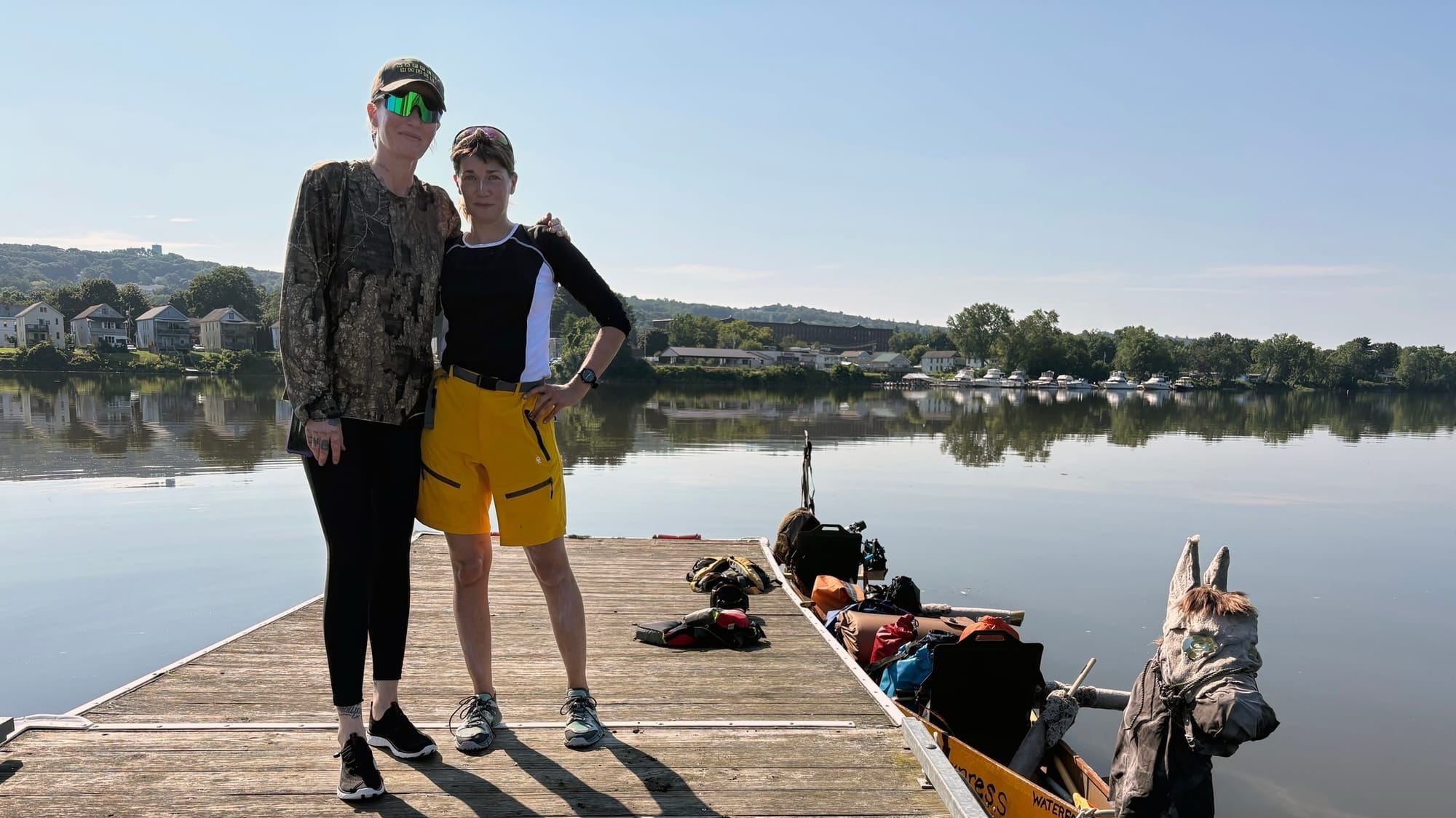
Artists Z Behl and Kim Moloney, working together under the name BALONEY STEEL, departed Waterford in Upstate New York in early August to paddle 350 miles to Buffalo. The journey, which they call "Mule's Passage," involves six hours of daily paddling and five weeks of camping, with the artists scheduled to reach Buffalo on September 5. The canoe is decorated to resemble a mule.
The project examines the Erie Canal as an engine of industrial labor and a site of Indigenous displacement. According to the artists' framing, the waterway's development carved through Native American lands and disrupted stewardship protocols and contracts with Indigenous populations. The canal runs through six territories of the Haudenosaunee Confederacy.
During the expedition, the artists plan to conduct interviews with ecologists, historians, activists, and residents along the waterway. The Everson Museum of Art in Syracuse will host an exhibition of documentation from the project in spring 2027.
The project receives support from the Erie Canal Museum Artist-in-Residence program and the New York State Canal Corporation. Bixpy supplied an electric outboard solar-charging motor for the canoe, and Camp Chow donated dehydrated meals for the journey.