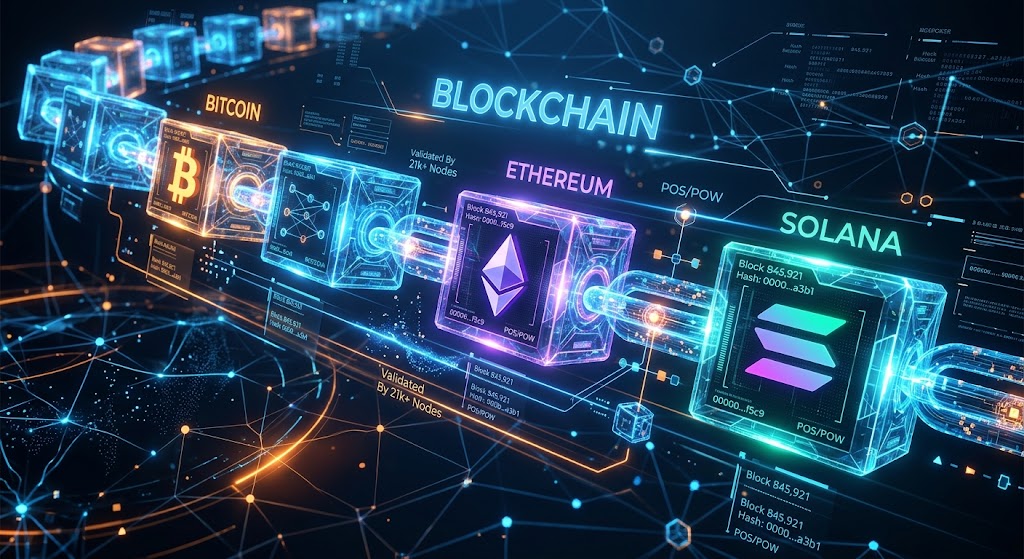
South Korea's Financial Services Commission announced a phased framework on September 4 to issue and trade tokenized stocks, bonds and funds on blockchain technology. The framework will take effect in February 2027, initially covering a limited range of financial products, with the scope broadening over time toward full on-chain settlement using stablecoins.
Under the system, securities would be recorded and managed on distributed ledgers rather than through conventional electronic networks, though the underlying financial assets remain unchanged. The key difference is in how ownership and transactions are recorded: blockchain-based assets are classified as token securities, distinct from paper-based or electronic securities registered through conventional systems.
The initial stage will allow money market funds and bonds aimed at institutional investors to be issued as tokens, along with unlisted shares digitalized through trust structures and publicly offered fractional investment products covering assets such as music copyrights and real estate. These fractional products enable investors to gain exposure to assets through smaller investment units without purchasing entire underlying assets.
The FSC chose gradual transition rather than moving existing electronic securities infrastructure onto blockchain at once, saying a full-scale migration could create substantial development costs and operational and technological risks. Securities firms will develop their own distributed ledger systems and link them with the Korea Securities Depository, while existing securities firms and approved over-the-counter exchange operators will conduct token securities activities within their current authorizations.
The second stage will extend tokenization to publicly offered securities accessible to retail investors, while the third phase would introduce stablecoins for settlement, potentially allowing tokenized securities transactions to be completed instantly on-chain. The FSC has not provided fixed launch dates for these later stages, with implementation dependent on performance of the initial phase, private-sector infrastructure progress and stablecoin legislation development.
Draft subordinate regulations are expected to be released for legislative notice at the end of September, followed by a public consultation period. The move comes as tokenized equities continue to expand internationally, with the number of addresses holding tokenized stocks reaching approximately 2.6 million as of September 3.