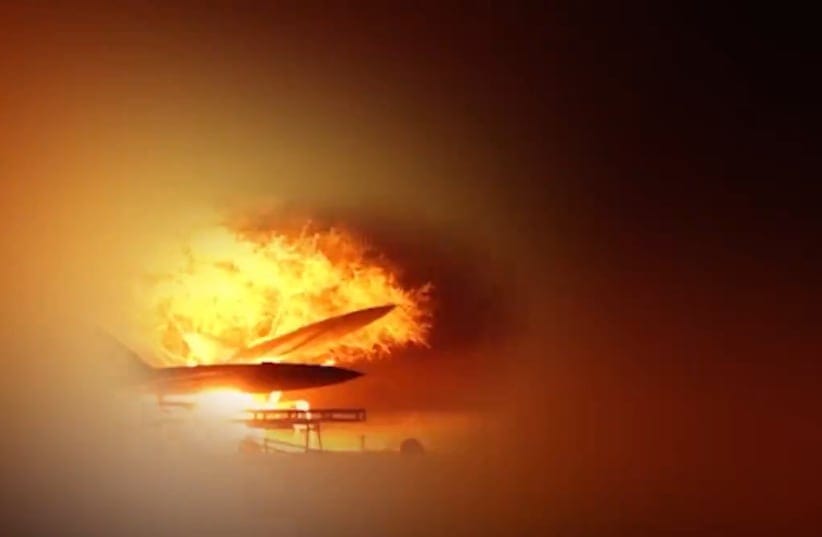
Iran carried out attacks on the Kurdistan Region of northern Iraq early on Wednesday as tensions with the United States intensified. The strikes targeted positions belonging to the Kurdistan Democratic Party of Iran (KDPI), a Kurdish opposition group, according to Rudaw, a regional media outlet based in Erbil, the capital of the autonomous Kurdistan Region.
The KDPI said the Islamic Republic attacked its bases and headquarters between 2:00 and 2:40 a.m. local time. According to the group's statement, the first wave of attacks targeted leadership residences in southern Kurdistan with three drones, followed by strikes on a training camp near Erbil that housed families of party members. The KDPI reported that since the start of what it described as the war with the United States and Israel, Iran had struck the party's facilities with more than 156 missiles and drones.
Iran's Tasnim news agency, linked to the Islamic Revolutionary Guard Corps, said the IRGC had also carried out attacks targeting US forces in Erbil. The Counter-Terrorism Directorate of the Kurdistan Region said the US-led Global Coalition shot down 10 explosive-laden drones over Erbil province, with no casualties reported. Two Kurdish security sources told Rudaw that the IRGC destroyed a US Tethered Aerostat Radar System surveillance balloon during the overnight attacks.
The KDPI is one of the principal Kurdish Iranian opposition groups. According to Rudaw's tally, Iran and its proxies in Iraq have carried out more than 1,000 drone and missile attacks on the Kurdistan Region since February. Iranian officials have justified the strikes by saying Kurdish opposition groups based in northern Iraq threaten Iranian national security, though attacks have also struck areas around US diplomatic and military installations and civilian zones.
Kurdish authorities have said the Kurdistan Region is not a party to the conflict and has not permitted its territory to be used as a launching point for attacks on Iran. The sustained campaign has strained Iraq's relations with the United States and reinforced calls by Prime Minister Ali al-Zaidi to bring all armed groups under state control, according to regional reporting.